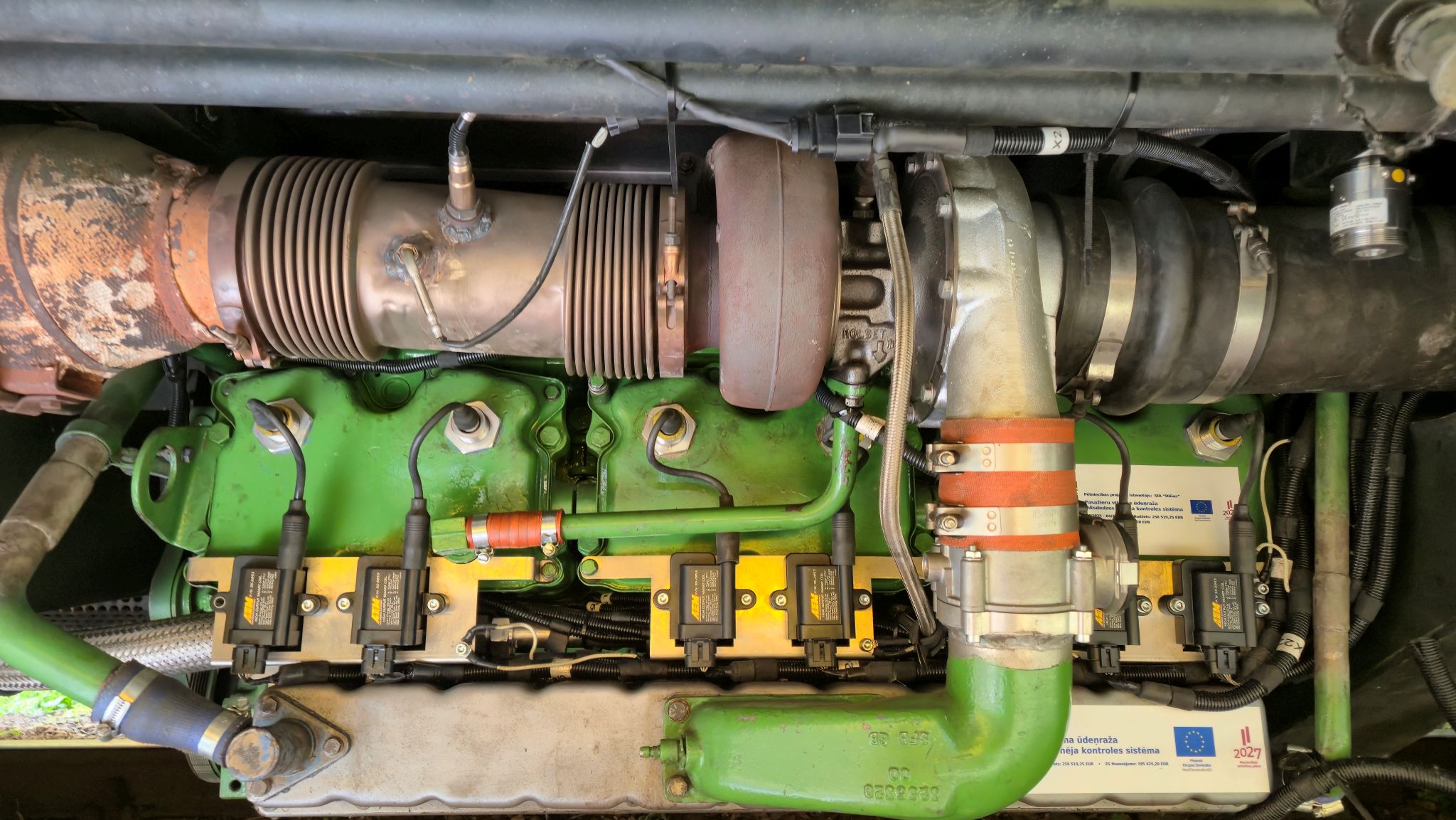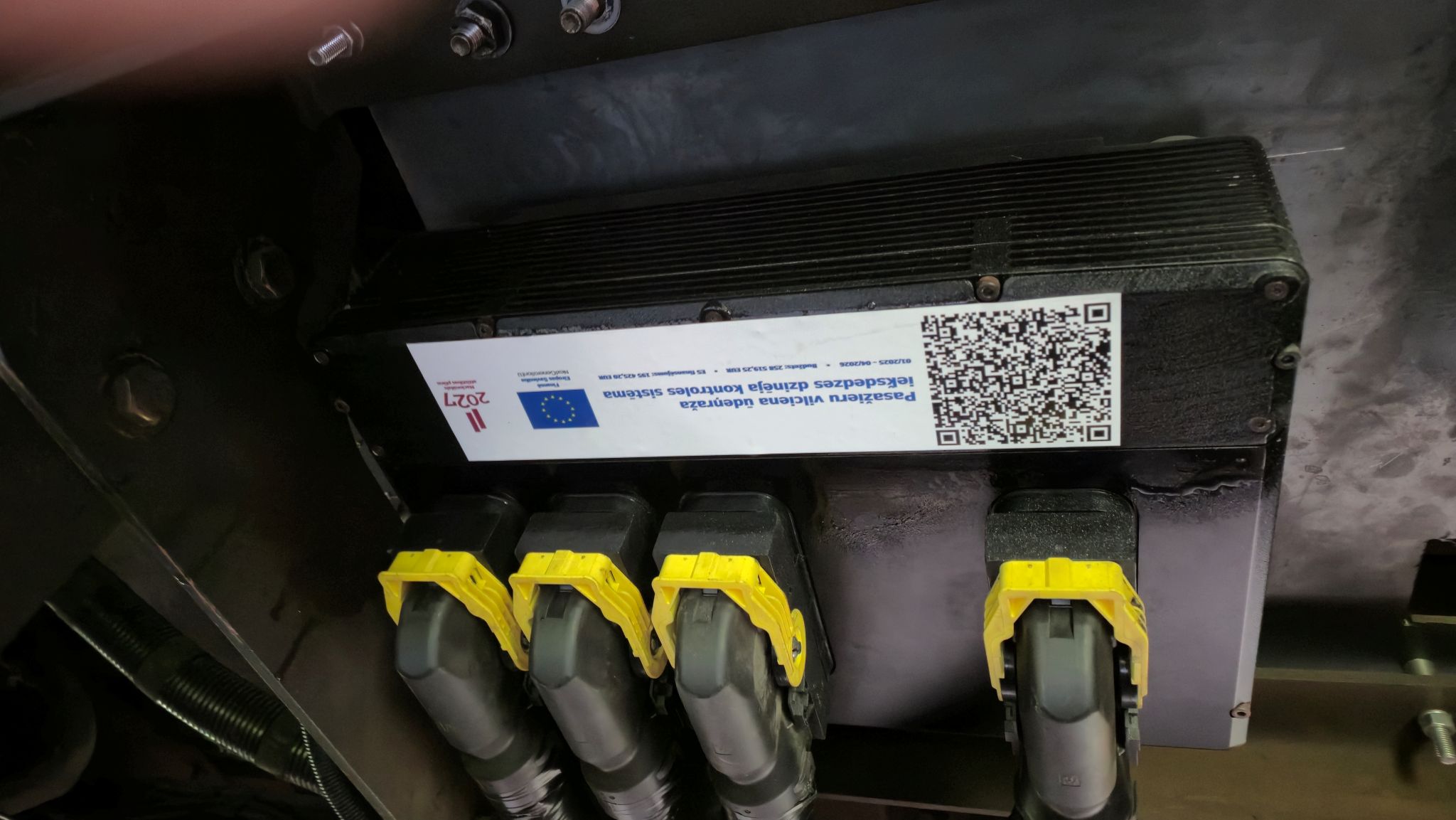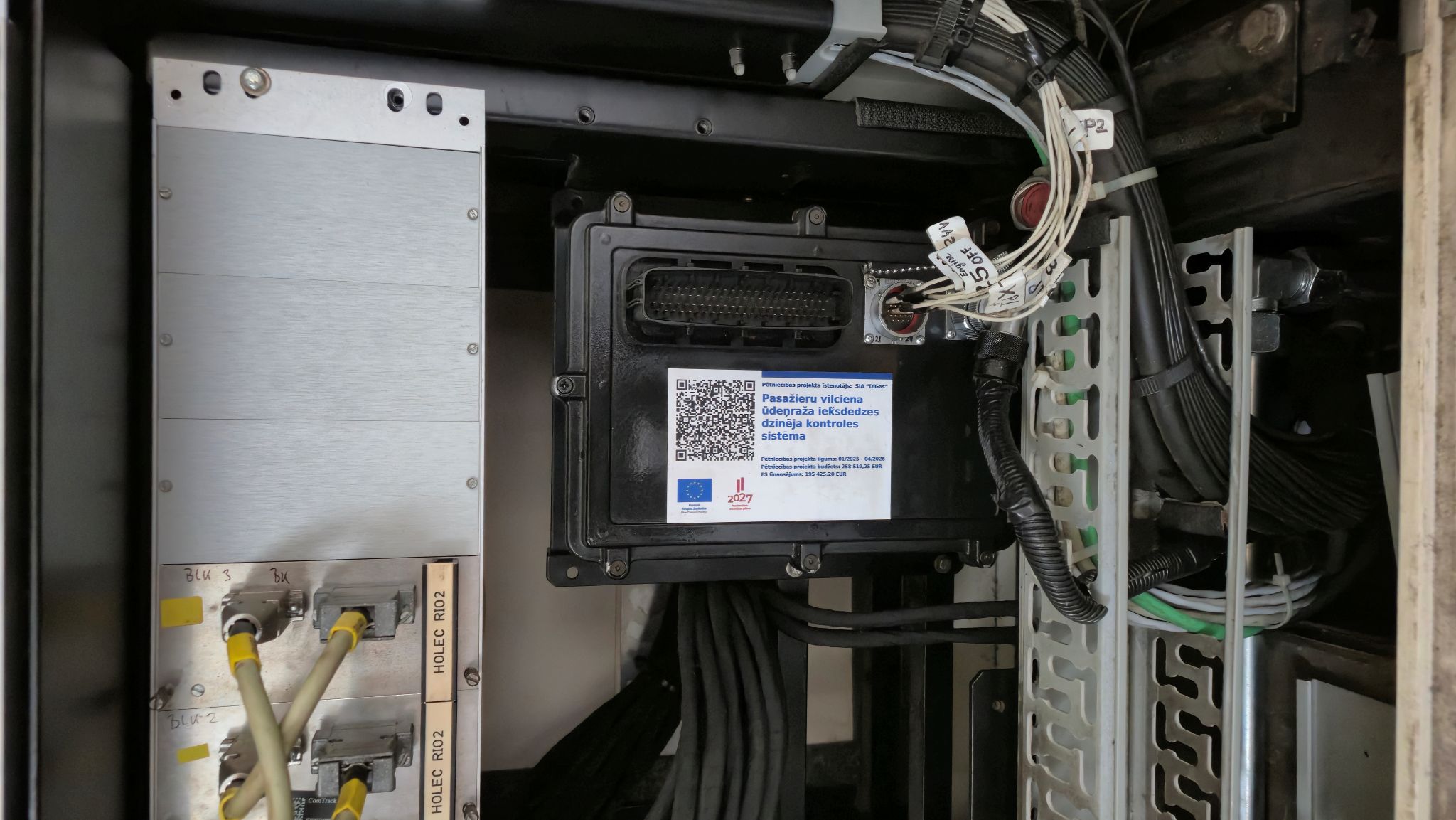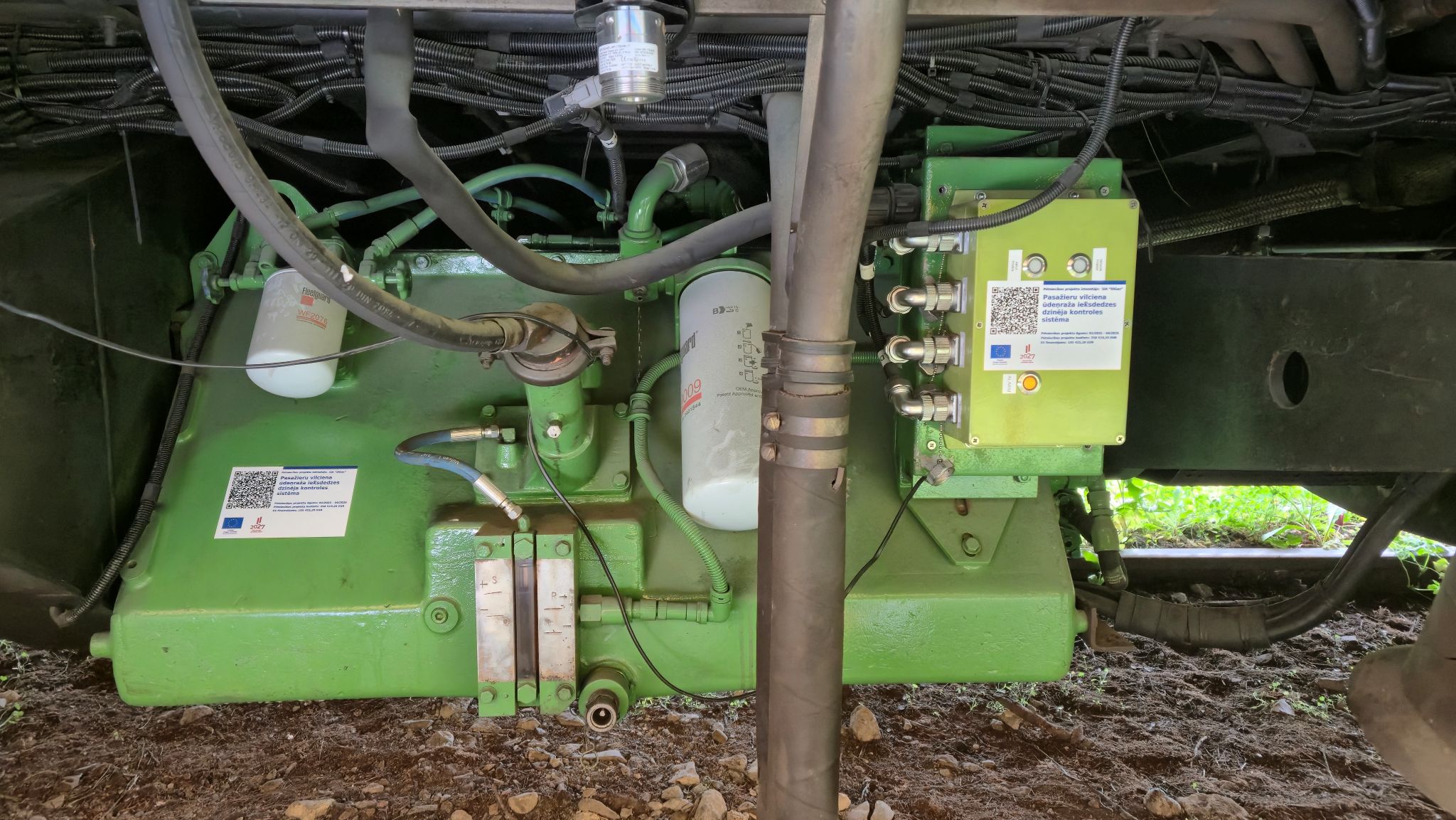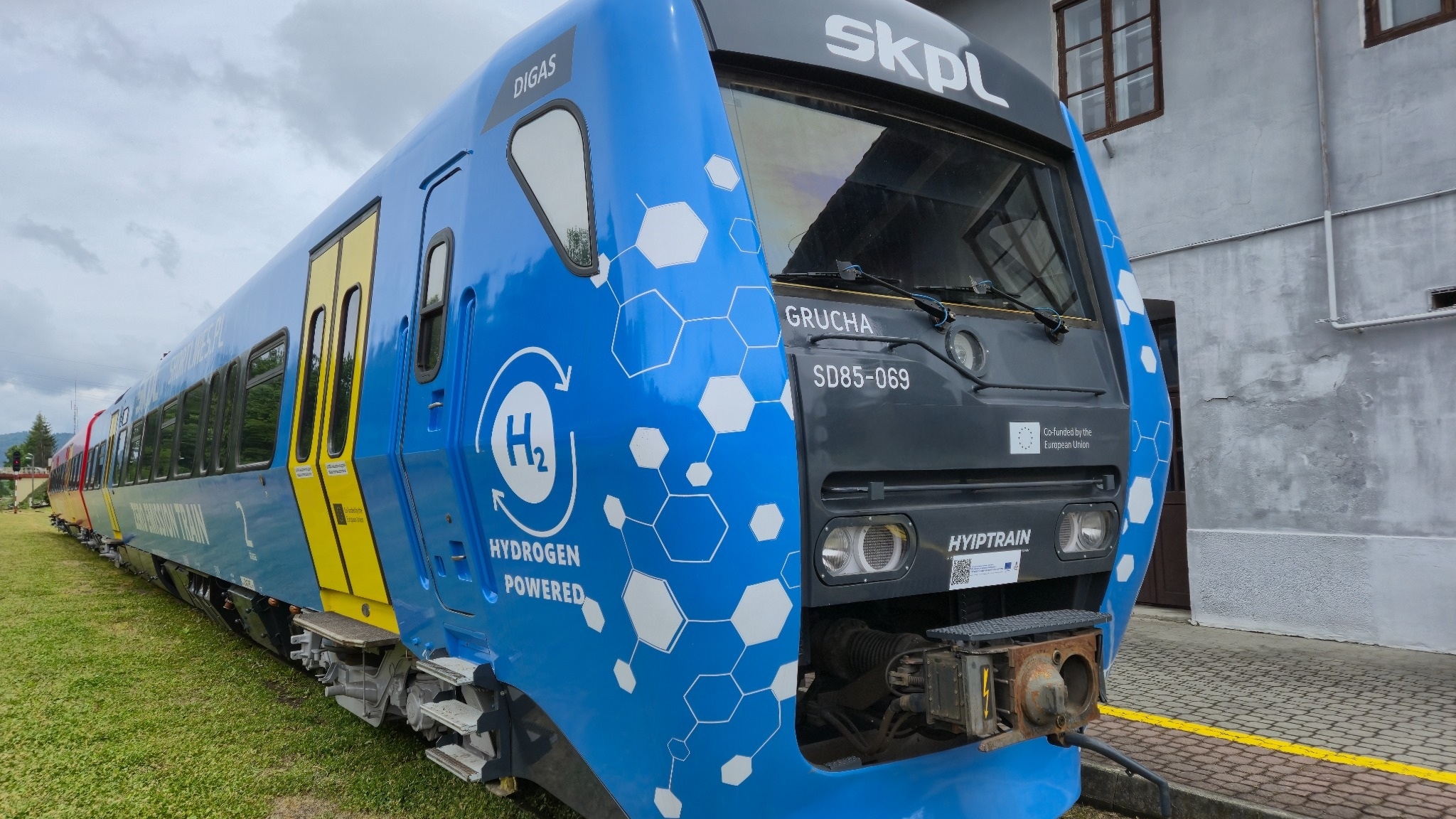
Within the digital-products programme of the MASOC Competence Centre, the Latvian engineering company DiGas has developed an electronic control system — the “brain” of the technology — that makes it possible to convert existing diesel passenger trains to run on hydrogen in an internal combustion engine. This control system is the critical, until-now missing component of the hydrogen conversion kit: it automates and coordinates all the other subsystems — fuel injection, combustion control and safety functions — combining mechanical and digital technologies with artificial-intelligence and data-analytics algorithms.
The importance of the technology is defined by market reality. In Western Europe alone around 7,200 diesel passenger trains are in service, and because a train serves for about 20 years on average, only a small share of the fleet can be replaced with new hydrogen trains each year. This leaves the majority of trains without a realistic renewable-fuel solution. DiGas’s conversion lets existing trains be modernised roughly 20 times more cheaply than buying a new hydrogen train. Replacing diesel with hydrogen cuts particulate-matter (PM) emissions almost to zero and nitrogen-oxide (NOx) emissions by about 70 %, while the engine also runs significantly more quietly.
The project’s long-term impact reaches beyond a single company. The technology supports the European Green Deal’s goal of cutting greenhouse-gas emissions by 90 % by 2050 and offers a way to decarbonise railway lines where electrification is not economically justified — today only 57 % of Europe’s rail lines are electrified. The system will be manufactured in Latvia, strengthening the local machine-building industry and its export capacity: an accumulated export volume of EUR 34.2 million is projected by 2031. At the same time, the project raises Latvia’s research, development and innovation capacity by demonstrating the technology on the first hydrogen internal-combustion-engine passenger train rebuilt in Europe.
“Working with the MASOC Competence Centre allowed us to turn a scientific idea into a commercial, export-ready product in a focused and structured way. The Competence Centre’s support gave us not only the financial leverage for research, but also a framework and discipline that helped us complete the project to a high standard — and even faster than originally planned. It is a vivid example of how state support delivered through a competence centre helps Latvian engineering companies create globally competitive technologies,” says Petro Dumenko, Board Member of SIA DiGas.
The research project “Passenger train hydrogen internal combustion engine control system” (No. D.3.1) was implemented within the project “MASOC KC support for the development of digital products” (No. 2.2.1.3.i.0/1/24/A/CFLA/007), financed by the European Union Recovery and Resilience Facility.